Fire Damage Recovery: Navigating Smoke Claims in VA
Recovering from a property fire is one of the most challenging experiences a Virginia property owner can face. While the visible charred remains of a fire are obvious, the invisible, pervasive spread of smoke and soot often causes the most extensive long-term damage. Navigating the complex insurance landscape to secure a fair settlement for smoke damage requires deep knowledge of state regulations, construction differences, and policyholder rights.
Is smoke damage covered by homeowners insurance in Virginia? Yes, smoke and soot damage are covered under standard Virginia homeowners insurance policies as part of fire damage recovery. This coverage extends to both structural components and personal contents, including hidden soot in wall cavities, attics, and HVAC systems, provided the damage is properly documented and linked to the fire event.
When discussing this topic, Fire & Smoke Damage is one of the core concepts practitioners align on—this guide explains how it fits your workflow.
Key related topics covered here include Fire & Smoke Damage with practical context for decision-makers.
When discussing this topic, Fire Damage Recovery: Navigating Smoke Claims in VA is one of the core concepts practitioners align on—this guide explains how it fits your workflow.
How does Virginia homeowners insurance cover hidden smoke and soot damage?
In practice, Water & Flood Damage often shapes how teams execute Fire Damage Recovery: Navigating Smoke Claims in VA—this section ties that concept to actionable steps.
In practice, Water & Flood Damage often shapes how teams execute Fire Damage Recovery: Navigating Smoke Claims in VA—this section ties that concept to actionable steps.
Standard homeowners insurance policies in the Commonwealth of Virginia are designed to return your property to its pre-loss condition. However, insurers often focus solely on structural items touched directly by flames, ignoring the secondary effects of fire and smoke damage. Smoke, soot, and chemical residues are highly acidic and corrosive, meaning they can cause permanent structural and aesthetic damage if left untreated.
Defining "Direct Physical Loss" Under VA Policies
For a smoke claim to be covered, the policyholder must show "direct physical loss" to the property. While the insurance carrier may argue that soot is merely a temporary surface deposit that can be washed away, Virginia law and industry standards recognize that chemical alterations, permanent discoloration, and toxic odors constitute physical damage. This includes tracking down microscopic soot particulates that settle deep within porous building materials.
Secondary Damage and Policy and Coverage Guidance
Proper policy and coverage guidance is critical when addressing secondary damage. Smoke can travel far beyond the room where the fire originated, penetrating drywall, flooring, and structural framing. When filing a claim, policyholders must ensure their estimate accounts for both the physical destruction from flames and the chemical damage caused by acidic soot, which can corrode metal fixtures, yellow plastics, and ruin electrical components over time.
What are the legal deadlines for Virginia fire insurance claim investigations?
Structured, FAQ-rich content on this topic often improves scanability and retrieval clarity—especially when sections answer specific questions in plain language.
Virginia has established clear rules to protect policyholders from bad-faith delays. These guidelines are monitored by the Virginia State Corporation Commission (SCC) Bureau of Insurance, which operates under statutes like Virginia Code § 38.2-1317 to protect the public interest. Knowing these specific deadlines ensures your carrier handles your claim with appropriate urgency.
The 15-Day Acknowledgment Rule (14 VAC 5-400-50)
Under Virginia Administrative Code (VAC) Title 14, specifically 14VAC5-400-50, an insurer must acknowledge receipt of a claim notification within 15 calendar days. This means they must quickly confirm they have received your claim and provide the necessary instructions and forms so you can comply with your policy conditions.
The 45-Day Investigation Limit (14 VAC 5-400-60)
If the insurance company cannot complete its investigation of a first-party claim quickly, they are subject to strict regulatory timelines. Under 14VAC5-400-60, the insurer has 45 calendar days from the initial claim notification to complete their investigation. If they need more time, they must send a written notice explaining why, and continue to update you in writing every 45 days until the claim is approved or denied. Furthermore, once a signed Proof of Loss is accepted, the insurer must notify you of their decision to accept or deny the claim within 15 calendar days.
How does smoke damage behave differently in historic Richmond homes vs modern Northern VA properties?
Virginia's diverse housing stock plays a massive role in how fire and smoke damage behave. The materials used in construction, local building codes, and structural layouts dictate the complexity and cost of the recovery process.
Historic Properties: Richmond and the Shenandoah Valley
Historic properties in places like Richmond, Alexandria, and the Shenandoah Valley present unique structural challenges. These homes often contain old-growth timber, plaster-and-lath walls, and antique knob-and-tube wiring. Plaster is highly porous, absorbing smoke odor far deeper than modern drywall, which often requires complete replacement rather than simple sealing. Additionally, repairing these homes triggers strict local historic preservation guidelines and modern building codes, which can exponentially increase the cost of restoration.
Modern Builds: Northern Virginia and Planned Communities
Conversely, modern builds in Northern Virginia (NoVA) utilize engineered wood, synthetic drywall, and extensive plastics. When these modern materials burn, they release highly toxic, synthetic soot and chemical residues. Modern open-concept floor plans and advanced HVAC zones also allow smoke to travel rapidly, contaminating the entire home even if the fire was contained to a small room. The cleanup of synthetic soot requires highly specialized, chemical-neutralizing cleaning agents to prevent long-term respiratory hazards.
What is the step-by-step process for filing a smoke damage claim in Virginia?
Filing a smoke damage claim requires meticulous attention to detail and proactive communication. Following a structured system ensures that you do not overlook hidden damages or give the insurance carrier a reason to delay your settlement.
Step 1: Mitigate and Protect the Property
Your insurance policy contains a "duty to mitigate" clause. This means you must take immediate steps to prevent further damage, such as boarding up broken windows, placing tarps over roof holes, and drying out standing water from firefighting efforts. Failing to mitigate can lead to the denial of subsequent damage, such as mold damage.
Step 2: Comprehensive Property Damage Claim Documentation
Document every inch of your property before any cleanup begins. Take high-resolution photos and videos of the soot patterns, charred areas, and standing water. Create a detailed inventory of all damaged personal belongings, noting their age, brand, purchase price, and replacement cost. Avoid throwing away any damaged items until an adjuster has inspected them, as this serves as vital physical proof.
Step 3: File the Claim and Obtain Professional Estimates
Contact your insurance company to officially file the claim. Once filed, obtain independent restoration and repair estimates. Relying solely on the insurance carrier's preferred contractors can lead to undervalued claims. Working with a licensed public adjuster to formulate an independent claim valuation will ensure that all repair methods reflect the actual scope of loss.
How can homeowners identify hidden soot contamination in HVAC ducts and insulation?
Hidden soot is one of the most hazardous elements of fire damage recovery. If soot is left inside your heating, ventilation, and air conditioning (HVAC) system or wall cavities, it will continuously recirculate toxic particulates throughout your home, endangering your family's health.
Testing the HVAC System for Soot
Never assume your HVAC system is clean just because the air smells normal. Professional testing is required to identify hidden soot contamination. This involves taking wipe samples or tape-lift samples from inside the return air plenums and ductwork, which are then analyzed in a laboratory to check for carbon black and ash. If soot is present, the entire system must be professionally cleaned, sealed, or replaced to prevent respiratory issues.
Inspecting Wall Cavities and Attic Insulation
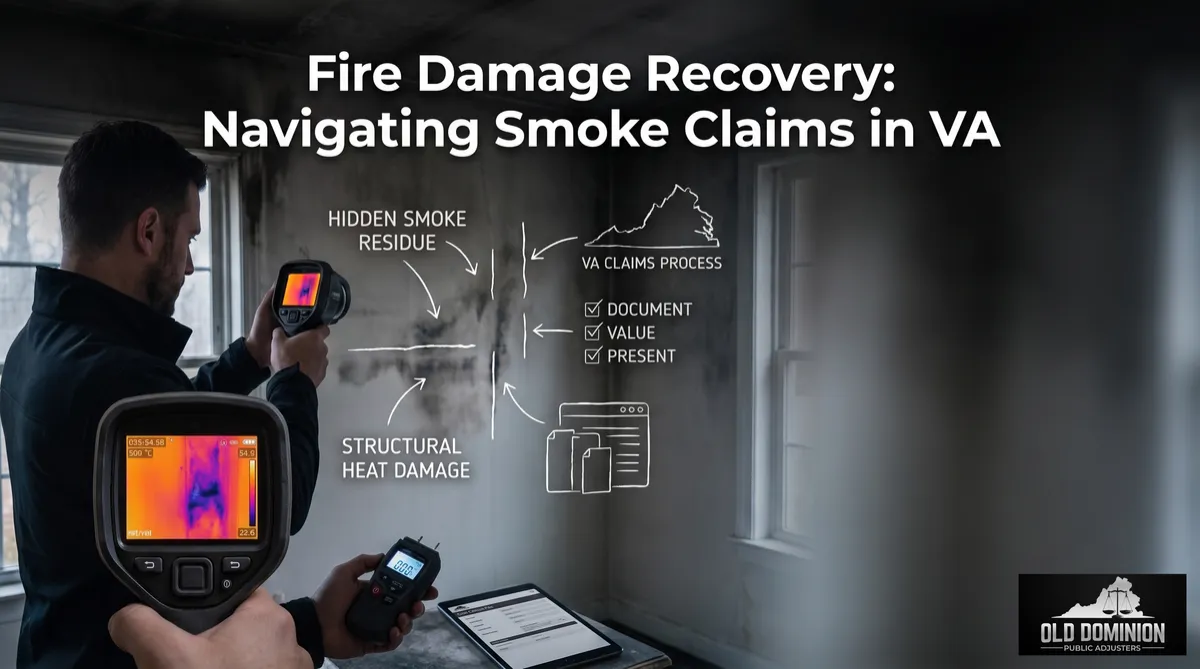
During a fire, hot air rises and expands, forcing smoke into wall cavities through outlets, light fixtures, and plumbing penetrations. Fiberglass and cellulose insulation act like giant air filters, trapping smoke particles and chemical odors permanently. To identify this, restoration professionals use thermal imaging cameras and chemical sponge tests on drywall seams and attic framing. Frequently, the insulation must be completely vacuumed out and replaced to remove the smoke odor permanently.
How do Virginia insurance adjusters calculate depreciation on smoke-damaged contents?
Valuing personal property, or contents, is one of the most highly contested parts of a fire and smoke claim. Insurance adjusters are trained to minimize payouts by applying aggressive depreciation schedules to your belongings.
Actual Cash Value (ACV) vs. Replacement Cost Value (RCV)
The type of policy you hold dictates how your contents are valued. An Actual Cash Value (ACV) policy pays you the depreciated value of your items based on their age and wear-and-tear. A Replacement Cost Value (RCV) policy pays you what it actually costs to buy the exact same item brand new today. However, even under an RCV policy, the insurer will initially pay you the ACV amount, withholding the depreciated portion until you buy the replacement and submit the receipt.
How Adjusters Apply Depreciation and How to Fight It
Adjusters often apply a flat, aggressive depreciation percentage across entire categories of items (e.g., claiming all electronics lose 50% of their value in two years). To fight this, policyholders must provide clear documentation showing the excellent pre-loss condition of their high-value items. Highlighting that items were well-maintained or rarely used can help reduce the depreciation percentage applied, maximizing your claim payout.
When should you hire a licensed Virginia public adjuster for a fire loss?
Filing a major fire or smoke claim is essentially a full-time job. Policyholders must interpret complex policy language, document hundreds of items, and negotiate with experienced insurance professionals who are working to protect the insurance carrier's bottom line.
Unbiased Claim Valuation and Settlement Negotiation
A licensed Virginia public adjuster is an independent insurance professional who works exclusively for you, the policyholder. Unlike company adjusters, a public adjuster’s goal is to maximize your recovery by creating a detailed, independent scope of loss. They handle all communication, settlement negotiation, and meetings with the insurance company, giving you peace of mind during a highly stressful time.
Navigating Complex Restoration Scenarios
If your property has sustained concurrent damages, such as water & flood damage from putting out the fire, storm damage, or subsequent mold damage, the claim becomes exponentially more complex. Public adjusters excel at separating and documenting these concurrent losses, preparing professional estimates, and handling supplement submission when hidden damages are uncovered mid-repair.
What are the common tactics insurers use to deny smoke claims in VA?
Understanding the standard tactics used by insurance carriers to minimize or deny smoke claims allows you to prepare a stronger, evidence-backed defense.
The "Just Clean It" Defense
One of the most common tactics is claiming that smoke-damaged walls, carpets, or framing do not need to be replaced but simply cleaned or sealed. While sealing works for minor soot, it is often inadequate for severe smoke penetration. If the underlying materials are structurally compromised or continue to emit toxic off-gassing, sealing will only mask a problem that will reappear months down the road. Independent lab testing is your best tool to fight this tactic.
Pre-Existing Wear and Tear and Gradual Damage
Insurers often try to attribute smoke discoloration or attic dust to pre-existing conditions, such as standard fireplace use, candle burning, or gradual environmental dust. They may claim that the HVAC duct buildup was already present before the fire. Overcoming this defense requires comparative evidence—such as real-time testing of the soot compounds to match them to the specific chemical signature of the materials burned during the fire.
| Strategy | Why it matters |
|---|---|
| Document Immediately | Establishes physical proof of soot patterns and damages before any cleanup or remediation alters the scene. |
| Perform Specialized HVAC Testing | Ensures invisible soot and carcinogens are identified, preventing toxic recirculation and protecting health. |
| Track Virginia Regulatory Timelines | Holds insurers accountable to the 15-day acknowledgment and 45-day investigation limits under VAC rules. |
| Hire a Public Adjuster Early | Saves time and stress by leveling the playing field with professional settlement negotiation and precise claim valuation. |
Virginia Smoke Damage Claim Checklist
- Report the fire loss immediately to your insurance carrier to trigger state deadlines.
- Mitigate the property to protect it from secondary elements, mold, or weather damage.
- Take comprehensive, high-resolution photographs of all soot, ash, and structural damage.
- Request professional chemical/wipe testing for the HVAC system and porous building materials.
- Compile a meticulous contents inventory list detailing replacement values, ages, and conditions.
- Consult with Old Dominion Public Adjusters for a professional, independent claim evaluation.
People Also Ask
Is smoke damage covered by homeowners insurance in Virginia?
Yes, smoke and soot damage are covered under standard Virginia homeowners insurance policies as part of fire damage recovery. This coverage extends to both structural components and personal contents, including hidden soot in wall cavities, attics, and HVAC systems, provided the damage is properly documented and linked to the fire event.
How long does a Virginia insurance company have to investigate a fire or smoke damage claim?
In Virginia, insurers have 15 calendar days to acknowledge receipt of your claim. They then have 45 calendar days to complete their investigation. If they require more time, they must send a written notice explaining the delay and continue to provide written updates every 45 days.
How do you prove hidden smoke damage to an insurance company?
Proving hidden smoke damage requires physical and chemical evidence. This is achieved by hiring independent restoration specialists to conduct wipe or tape-lift sampling, thermal imaging of wall cavities, and laboratory analysis of air duct particulates to verify the presence of fire-related soot and carbon black.
Frequently Asked Questions
Can I clean smoke damage myself or should I hire professionals?
It is highly recommended to hire professionals. Acidic soot and smoke odor are incredibly difficult to remove without specialized thermal foggers, ozone machines, and chemical counter-agents. Attempting to clean it yourself can smear soot, pushing it deeper into porous surfaces and permanently trapping odors.
What is the difference between RCV and ACV in a smoke claim?
Replacement Cost Value (RCV) covers the current cost to buy a new, identical item to replace your damaged property. Actual Cash Value (ACV) only pays the depreciated value based on the item\'s age and wear-and-tear. RCV policies are far superior but require you to replace the items to recover full value.
How does a public adjuster get paid in Virginia?
Public adjusters in Virginia work on a contingency fee basis, meaning they receive a small, pre-agreed percentage of the final insurance settlement. There are no upfront fees, and they only get paid when you successfully recover your settlement from the insurance carrier.
Can the insurance company force me to use their preferred contractor?
No, you have the legal right to hire any licensed contractor of your choice to complete the repairs on your property. While insurers may recommend preferred contractors, these businesses often have financial agreements with the carrier, which could influence their repair estimates.
What happens if additional smoke damage is found after my claim is closed?
If you discover hidden soot or smoke damage after your claim has been settled, you can reopen the claim. This is done through a supplement submission, where your public adjuster or contractor submits photographic and laboratory evidence of the newly discovered damage to request additional funds.
Does smoke damage cause mold?
Smoke itself does not cause mold, but the water used by fire departments to extinguish flames often does. The combination of high humidity, standing water, and organic building materials creates the perfect breeding ground for rapid mold damage, which must be addressed concurrently.
Sources & Regulatory References
Content type: Editorial guide
Expertise: Fire Damage Recovery
Topics: Fire Damage Recovery: Navigating Smoke Virginia smoke damage insurance claim VA fire damage recovery process how to prove smoke damage to insurance adjuster
Editorial standards: practical guidance, sourced claims when cited, and updates when practices change.
class="ugo-cta-bridge"> Teams working with Old Dominion Public Adjusters that adopt scalable, evidence-based approaches to Fire Damage Recovery: Navigating Smoke Claims in VA are better positioned for how search and AI discovery continue to evolve. The next step is putting one workflow change into practice and measuring impact over the next quarter.Ready to Get Started?
Old Dominion Public Adjusters helps Virginia property owners document the full scope of loss, prepare detailed estimates, understand their policy, and present a clear, well-supported claim.