Hidden Mold in Richmond Homes: Spring 2026 Guide — Hidden M…
Spring in Virginia brings blooming dogwoods, warmer afternoons, and an inevitable surge of seasonal rain. However, for property owners in the Richmond metro area, the season also introduces a silent threat to indoor air quality and structural integrity: hidden mold. While most homeowners associate property damage with major events like storm damage, water & flood damage, or fire & smoke damage, the slow, unseen accumulation of moisture during a wet spring can trigger extensive mold damage that goes unnoticed for months.
Understanding how seasonal weather shifts interact with local building styles and geographical conditions is crucial for protecting your investment. This guide explores why Richmond properties are uniquely vulnerable to hidden mold, how to spot the early warning signs, and how to navigate the complex insurance claims process if you discover extensive mold damage in your home or commercial building.
Hidden mold — unseen fungal growth that develops in concealed cavities such as behind drywall, under floorboards, or within crawl spaces. In Richmond, wet spring weather and dense clay soils trap moisture against foundations, creating a high-humidity environment that allows mold spores to colonize hidden areas within 24 to 48 hours of water exposure.
Key related topics covered here include Fire & Smoke Damage, Water & Flood Damage with practical context for decision-makers.
When discussing Hidden Mold in Richmond Homes: Spring 2026 Guide, Hidden Mold in Richmond Homes: Spring 2026 Guide is one of the core concepts practitioners align on—this guide explains how it fits your workflow.
How do wet spring weather and Richmond’s clay soil trap moisture in home foundations?
Richmond’s unique geological makeup plays a primary role in residential moisture problems. The region is characterized by a high concentration of dense clay soils, often referred to by local builders as "Richmond clay." Unlike sandy or loamy soils that allow rainwater to drain rapidly, clay has a tight pore structure that absorbs water slowly and retains it for extended periods. During heavy spring downpours, the clay soil surrounding a home's foundation becomes completely saturated.
This saturated clay acts like an underground sponge, holding water directly against concrete masonry units (CMUs), brick, or poured concrete foundation walls. As hydrostatic pressure builds up in the waterlogged soil, moisture is forced inward through porous foundation materials in a process known as capillary action. This persistent moisture intrusion is a leading cause of elevated humidity in crawl spaces and basements, laying the perfect foundation for hidden mold colonies to thrive.
Hydrostatic Pressure and Basement Drainage Challenges in RVA
When clay soils expand with moisture, they put immense physical pressure on foundation walls. This can cause microscopic cracks to open in mortar joints and concrete. Homeowners often overlook these small entry points until a musty odor develops or water seepage becomes visible after a prolonged rainstorm. Without a properly functioning exterior footing drain or interior sump pump system, basement walls remain damp, creating an ideal environment for mold to grow behind finished drywall or under carpet padding.
What are the most common signs of hidden mold growing behind drywall in Virginia?
Structured, FAQ-rich content on Hidden Mold in Richmond Homes: Spring 2026 Guide often improves scanability and retrieval clarity—especially when sections answer specific questions in plain language.
Because mold spores require dark, undisturbed spaces with organic food sources, drywall is one of the most common materials they colonize. Drywall consists of a gypsum core sandwiched between heavy paper facings, which provide an abundant source of cellulose. When moisture from a leaking window frame, roof leak, or plumbing line seeps into a wall cavity, mold can grow extensively on the backside of the drywall long before it becomes visible on the painted interior surface.
Detecting mold behind walls requires paying close attention to subtle physical changes in the wall structure. Homeowners should look for bubbling or peeling paint, cracking plaster, or a slight bowing in the drywall panels. Wall discoloration, even if it appears as a faint yellow or light brown water stain, often indicates that a moisture source has been active inside the wall cavity for several days or weeks, meaning mold is almost certainly present on the interior side of the gypsum board.
Physical Changes in Drywall and Paint to Watch For
When mold feeds on the paper backing of drywall, it weakens the structural integrity of the board. If you press gently on a suspected area and the drywall feels soft, spongy, or gives way slightly, moisture has compromised the material. In some cases, you may notice dark, pinprick-sized spots forming along the baseboards or outlet covers, which are often the outer edges of a much larger, hidden colony growing within the wall cavity.
Distinguishing Mold Symptoms from Seasonal Spring Allergies
In Richmond, spring is notorious for high pollen counts, making it easy to mistake mold-related health symptoms for seasonal allergies. However, there are key differences. Allergy symptoms typically subside when you leave the home or during rainy days when pollen counts drop. In contrast, indoor mold exposure symptoms—such as persistent coughing, watery eyes, skin irritation, and respiratory congestion—often worsen when spending time indoors, particularly in rooms with poor ventilation, and persist year-round regardless of outdoor pollen levels.
Why does a musty smell from your Richmond HVAC system indicate a hidden mold problem?
Your heating, ventilation, and air conditioning (HVAC) system is the respiratory system of your home. During the transition from winter heating to spring cooling, HVAC systems are highly susceptible to condensation buildup. When warm, humid Richmond spring air passes over a cold evaporator coil, moisture condenses out of the air. Under normal conditions, this water drips into a condensate pan and drains away safely. However, if the drain line is clogged or the system is poorly maintained, standing water creates an instant breeding ground for mold.
When the blower fan turns on, it circulates mold spores throughout the entire home via the supply ductwork. If you notice a sharp, earthy, or musty smell specifically when your air conditioner or heat pump cycles on, this is a strong indicator that mold is actively growing within the ductwork, on the evaporator coil, or inside the air handler cabinet itself. Ignoring this smell can lead to widespread contamination as spores settle on carpets, furniture, and personal property throughout the home.
HVAC Duct Condensation and Standalone A/C Units
In many older Richmond homes, ductwork runs through unconditioned spaces like attics or crawl spaces. If these ducts are poorly insulated, the cold metal or flexible ducting will sweat when exposed to warm, humid air. This condensation can soak surrounding building materials, leading to hidden mold damage along the joists and ceiling drywall. Similarly, standalone window air conditioning units can trap moisture against wooden window sills and plaster walls if they are not pitched correctly to drain outward.
Should Richmond homeowners open or close crawl space vents during humid spring months?
One of the most debated topics among Virginia property owners is whether crawl space vents should be kept open or closed during the spring and summer. Historically, building codes required crawl space vents to remain open to allow air circulation. However, modern building science has proven that in humid climates like Richmond, keeping vents open during the spring and summer actually introduces massive amounts of moisture into the crawl space.
When warm, moisture-laden outdoor spring air enters a cool, shaded crawl space, it reaches its dew point and condenses onto cold surfaces, such as wooden floor joists, subflooring, and metal ductwork. This condensation creates a continuous supply of moisture that fuels mold growth and accelerates wood rot. Therefore, for most modern homes, the best practice is to seal the crawl space vents, install a heavy-duty vapor barrier or complete encapsulation system, and use a dedicated dehumidifier to control humidity levels.
Historical vs. Modern Homes: Ventilation Requirements
While sealing vents is highly effective for modern homes with concrete foundations and modern framing, historical Richmond properties (such as those in the Fan District, Church Hill, or Museum District) require a more nuanced approach. Many of these historic homes were constructed using solid masonry piers, plaster walls, and old-growth timber, which rely on breathing room to shed moisture. Completely sealing a historic crawl space without a comprehensive plan can trap rising dampness within the old brick and mortar, leading to structural decay and severe mold outbreaks.
Where does mold typically hide in historic vs. modern Richmond homes?
The architectural era of your Richmond home heavily influences where mold is likely to hide. Historic homes and modern construction utilize vastly different building materials, insulation techniques, and structural layouts, each presenting unique vulnerabilities to moisture accumulation and mold damage.
The table below highlights the key differences in common mold harborages between these two eras of Richmond residential construction:
| Property Era | Common Hidden Mold Locations | Primary Moisture Drivers | Recommended Preventative Action |
|---|---|---|---|
| Historic (Pre-1950) | Behind plaster walls, crawl spaces under heart pine subfloors, stone/brick basements. | Capillary draw through old masonry, lack of modern vapor barriers, leaking roof valleys. | Maintain exterior mortar (repointing), ensure proper gutters, use active dehumidification in basements without sealing historic vents blindly. |
| Modern (Post-1980) | Behind drywall in finished basements, around fiberglass batt insulation, HVAC utility closets. | Tight building envelopes trapping interior humidity, condensation on metal ductwork, hydrostatic pressure in clay soils. | Install high-quality vapor barriers, maintain sump pumps, service HVAC systems twice yearly, run basement dehumidifiers. |
Why do standard home inspections fail to detect hidden mold issues for buyers?
When purchasing a home in Richmond, buyers rely on a standard home inspection to identify potential structural, electrical, and plumbing issues. While a general home inspector is skilled at identifying visible defects, they are not equipped—nor contractually obligated—to search for hidden mold. A standard home inspection is strictly a non-invasive, visual assessment of the accessible areas of the property.
If mold is growing behind finished drywall in a basement, underneath a newly installed laminate floor, or deep inside the HVAC ductwork, a general home inspector will not find it unless there is visible water staining or a highly obvious odor at the time of the inspection. Furthermore, general home inspectors do not perform air sampling or invasive thermal imaging, leaving home buyers vulnerable to discovering expensive mold damage shortly after moving in.
Limitations of Visual Inspections
Because home inspectors cannot tear into walls or move heavy furniture, seller cosmetic cover-ups can easily mask active mold problems. A fresh coat of paint over a water-stained ceiling or a plug-in air freshener running in a damp basement can temporarily conceal the physical signs and odors of mold, allowing the transaction to close while the underlying moisture issue continues to worsen.
How does professional mold testing in Richmond VA differ from DIY mold test kits?
Many Richmond property owners turn to DIY mold test kits sold at local hardware stores when they suspect a mold problem. These kits typically contain a petri dish with a settling agar plate that you leave open to the air for a set period. However, these kits are notoriously unreliable and often produce misleading results. Mold spores exist naturally in almost all indoor and outdoor environments; therefore, a DIY petri dish will almost always grow mold, regardless of whether you have an active, dangerous mold colony inside your walls.
Professional mold testing, on the other hand, utilizes calibrated equipment and scientifically validated methodologies to provide an accurate assessment of indoor air quality. Certified industrial hygienists or mold inspection professionals collect indoor air samples and compare them directly to control samples taken outdoors. This comparison determines whether there is an elevated concentration of mold spores indoors, indicating an active, hidden moisture source and mold amplification.
Air Sampling vs. Surface Sampling
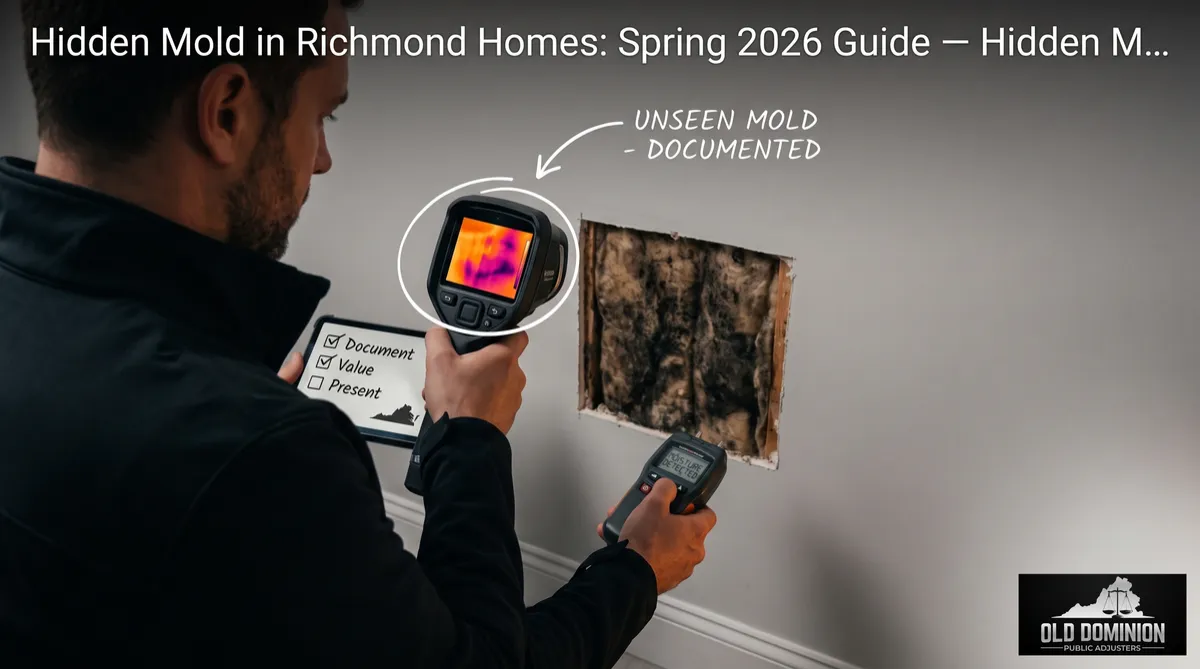
In addition to air sampling, professionals use surface sampling (such as tape lifts or swab samples) to identify the specific genus of mold present. They also employ advanced diagnostic tools like infrared thermal imaging cameras to detect temperature differentials behind walls, which indicate hidden moisture pockets where mold is likely to be growing. Moisture meters are used to measure the moisture content of wood, drywall, and masonry, pinpointing the exact source of the leak.
What steps should Richmond homeowners take to prevent crawl space mold this spring?
Preventing mold growth in your crawl space requires a proactive strategy that addresses both bulk water intrusion and ambient humidity. By taking steps to control moisture before the heavy spring rains arrive, you can keep your crawl space dry and protect your home from mold damage and structural wood decay.
Crawl Space Mold Prevention Checklist
- Clean and Extend Downspouts: Ensure your gutters are free of debris and that downspouts extend at least 6 to 10 feet away from your foundation to prevent rainwater from saturating the clay soil near your crawl space walls.
- Inspect the Vapor Barrier: Ensure your crawl space has a functional 6-mil or thicker polyethylene vapor barrier covering 100% of the ground. Overlap seams by at least 12 inches and tape them securely to prevent ground moisture from evaporating into the crawl space air.
- Check Foundation Drainage: Inspect your crawl space for signs of standing water. If water accumulates after a heavy rain, consider installing an interior French drain and a sump pump with a battery backup.
- Monitor Humidity Levels: Place a wireless hygrometer in your crawl space to monitor relative humidity from inside your home. Aim to keep crawl space humidity levels consistently below 55% to 60% to prevent mold spore germination.
- Inspect HVAC Ductwork: Ensure that all HVAC ducts running through the crawl space are tightly sealed and properly insulated to prevent condensation from forming on the duct surfaces.
When is professional mold remediation required for homes near the James River?
Properties located near the James River, or in low-lying areas of Richmond such as Shockoe Bottom, are particularly susceptible to high water tables and seasonal flooding. When a home suffers water & flood damage, prompt action is critical. According to guidelines set by the Environmental Protection Agency (EPA), any area of mold contamination that exceeds 10 square feet (roughly a 3-foot by 3-foot patch) requires professional mold remediation to ensure safe and thorough removal.
Professional remediation involves isolating the contaminated area using heavy plastic sheeting and negative air pressure machines equipped with HEPA filters. This containment prevents mold spores from spreading to unaffected areas of the home during the cleanup process. Technicians wear personal protective equipment (PPE), remove contaminated porous materials (like drywall and carpeting), treat structural framing with specialized antimicrobials, and use HEPA vacuums to thoroughly clean all surfaces.
Navigating Mold Damage Insurance Claims in Virginia
Dealing with property damage claims involving mold can be incredibly challenging for policyholders. Many insurance policies contain strict limitations or exclusions for mold damage, often capping coverage at a low limit (such as $5,000 or $10,000) or denying the claim entirely if they determine the mold was caused by "long-term wear and tear" or "lack of maintenance." To secure a fair settlement, you must document that the mold damage was the direct result of a covered peril, such as sudden water & flood damage from a ruptured pipe or storm damage from a wind-damaged roof.
This is where partnering with a licensed public adjuster becomes invaluable. Unlike insurance company representatives who evaluate claims on behalf of the carrier, a public adjuster works exclusively for you, the policyholder. At Old Dominion Public Adjusters, we specialize in property damage claim documentation, precise claim valuation, and settlement negotiation. We work to ensure your policy and coverage guidance are fully leveraged, preparing comprehensive estimates and managing supplement submissions to help you recover the funds needed to restore your Richmond home safely.
People Also Ask
How do I know if I have hidden mold in my Richmond house?
The most common indicators of hidden mold in Richmond properties include a persistent, musty or earthy odor that worsens when the HVAC system runs, unexplained physical symptoms like worsening indoor allergies, and structural signs such as peeling paint, warped baseboards, or soft spots on drywall panels.
Why does my house smell musty after a rainy spring in Richmond?
Rainy spring weather saturates Richmond's dense clay soils, forcing moisture through foundation walls via capillary action. This increases crawl space and basement humidity, causing moisture to condense on wooden joists and subfloors, which leads to active mold growth and a strong musty smell.
What are the sneakiest signs of mold in Virginia crawl spaces?
Sneaky signs of crawl space mold include white, powdery efflorescence on brick or block foundation walls, rusting floor jacks, condensation dripping from metal ductwork, sagging fiberglass insulation batts, and buckling hardwood floors on the first level of the home.
Who should I call for a reliable mold inspection in Richmond VA?
For a reliable mold inspection, you should hire a certified, independent mold inspector or industrial hygienist who does not perform remediation services. This ensures an unbiased assessment of your indoor air quality, complete with air and surface sampling and thermal imaging analysis.
Sources & further reading
Frequently Asked Questions
Is mold damage covered by standard home insurance in Virginia?
Mold damage is typically only covered if it is the direct result of a sudden, accidental covered peril, such as a burst pipe or storm damage. If the mold is deemed to have developed over time due to high humidity, lack of maintenance, or slow wear and tear, it is generally excluded or subject to strict coverage limits.
How much does professional mold remediation cost in Richmond?
The cost of professional mold remediation in Richmond varies widely depending on the extent of the damage. Minor attic or basement remediation can range from $1,500 to $4,000, while severe crawl space encapsulation and structural mold remediation can cost anywhere from $5,000 to over $15,000.
Can I clean up hidden mold myself with bleach?
Cleaning mold with household bleach is not recommended, especially on porous surfaces like wood or drywall. Bleach contains mostly water; while it may kill surface mold, the water penetrates the material, feeding the mold roots deep inside and causing the mold to return quickly once the surface dries.
What is crawl space encapsulation and does it prevent mold?
Crawl space encapsulation involves sealing all foundation vents, covering the dirt floor and walls with a heavy-duty multi-layer vapor barrier, sealing joints, and installing a dehumidifier. This process isolates the crawl space from outdoor humidity and ground moisture, effectively preventing mold growth.
How long does it take for mold to grow after water damage?
Under warm, humid conditions, mold spores can germinate and begin to colonize building materials within 24 to 48 hours of water exposure. This is why immediate water extraction, structural drying, and professional property damage claim documentation are critical after any water & flood damage event.
Can mold behind walls spread to my HVAC system?
Yes. If mold is growing behind drywall near air return vents or inside utility closets, microscopic mold spores can easily be pulled into the HVAC system's return air stream. Once inside, the spores are distributed throughout the entire property, contaminating other rooms and ductwork.
Content type: Editorial guide
Expertise: Hidden Mold in Richmond Homes: Spring 2026 Guide
Topics: Hidden Mold in Richmond Homes: Spring 2026 Guide Hidden Mold In Richmond Homes: Richmond clay soil mold damage musty smell in Richmond HVAC
Editorial standards: practical guidance, sourced claims when cited, and updates when practices change.
class="ugo-cta-bridge"> Teams working with Old Dominion Public Adjusters that adopt scalable, evidence-based approaches to Hidden Mold in Richmond Homes: Spring 2026 Guide are better positioned for how search and AI discovery continue to evolve. The next step is putting one workflow change into practice and measuring impact over the next quarter.Ready to Get Started?
Old Dominion Public Adjusters helps Virginia property owners document the full scope of loss, prepare detailed estimates, understand their policy, and present a clear, well-supported claim.